

06 Oct Landscape Lighting for Apartment Complexes and Shopping Centers: Where to Start
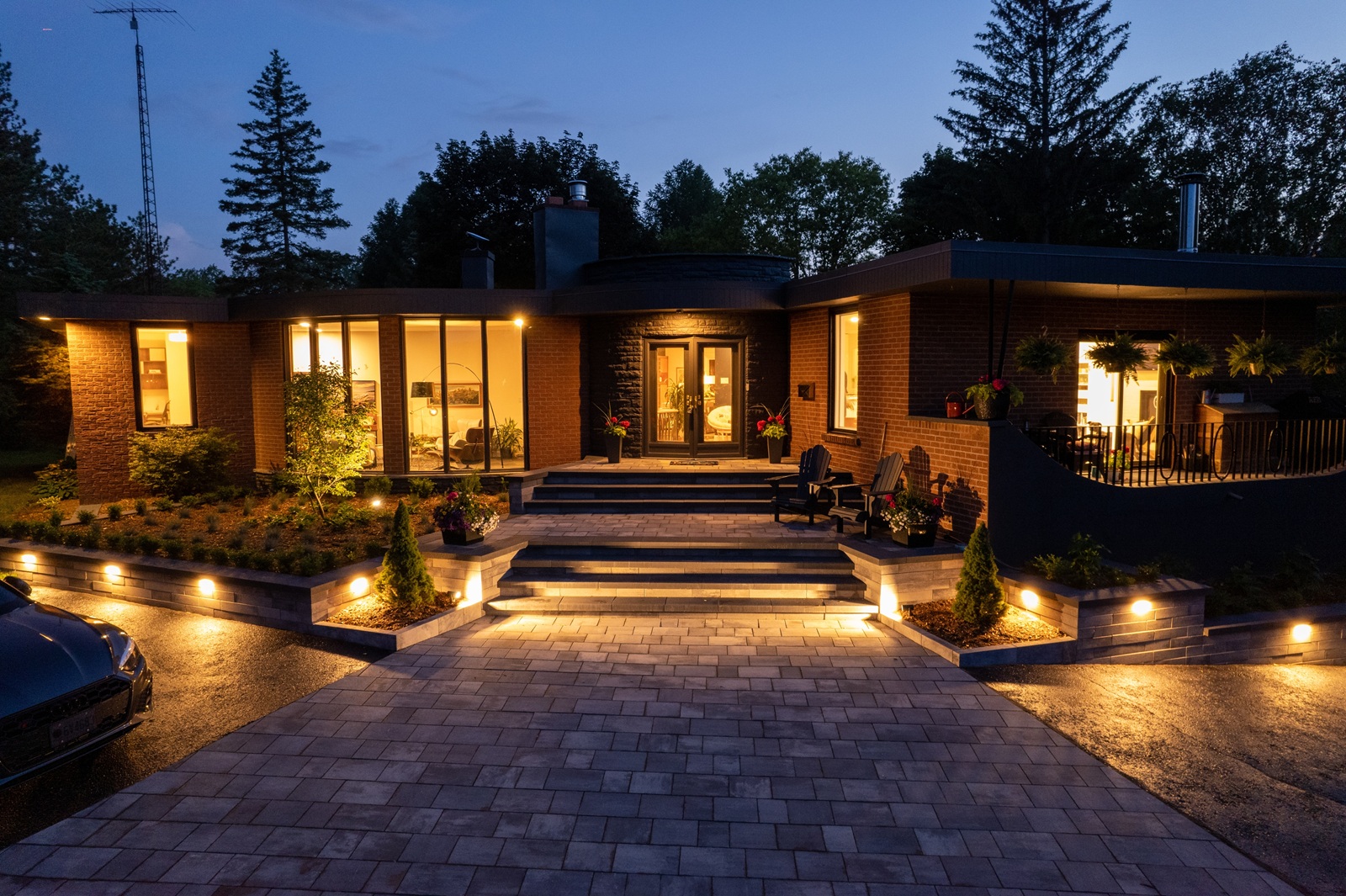
At a commercial property, landscape lighting earns its place in three spots: the entrances people use first, the walkways they follow, and the planting that shapes the first impression. Start there, keep the design restrained, and plan wiring and fixture placement around irrigation and snow plowing so one winter does not undo the work.
Why Property Managers Think About Lighting Now
Clocks go back on November 1, and from then on the evening commute, the after work errand run, and the dinner hour all happen in the dark. That is when a dim entrance or an unlit step gets noticed. The National Safety Council reports that more than 8.8 million people were treated in emergency rooms for fall related injuries in 2023 and lists good lighting indoors and out among its basic prevention steps, which is a good reason to treat the path from the parking area to the door as the first priority.
Where to Start at an Apartment Complex
- Building entrances and approaches. Residents and guests find the door first. Path lights and low fixtures along the approach make it easy to follow, shielded so light does not shine into ground floor windows.
- Walkways between buildings. Staggered path lights keep long runs consistent without overlighting.
- Steps, ramps, and elevation changes. These deserve dedicated step or hardscape lighting rather than relying on nearby path lights.
- Common areas. Uplighting a mature tree or a gathering spot makes shared outdoor space usable after dark.
- Entry landscaping. A restrained accent at the property entrance sets the tone for the whole community.
Where to Start at a Shopping Center
- Storefront approaches. Light the walk from the lot to the doors so customers can see steps, curbs, and changes in surface.
- Entry landscaping and planted islands. Accent lighting on trees and planting beds gives the center a finished look in the evening.
- Walkways between buildings or pads. Consistent path lighting helps customers move from one store to the next.
- Seasonal flexibility. Color changing LED fixtures can shift with the season or an event, which suits properties that market around the calendar.
Parking lot pole lighting is a separate system. Landscape lighting complements it rather than replacing it.
Design Principles That Matter at Scale
DarkSky and the Illuminating Engineering Society’s five principles for responsible outdoor lighting are a good checklist for a commercial property: light should be useful, targeted, no brighter than necessary, controlled, and warm in color where possible. At commercial scale, the targeted principle matters most, because light that spills beyond where it is needed can reach neighbors’ windows and create glare for your own visitors.
Efficiency and controls matter more when fixtures run on a schedule every night. According to a U.S. Department of Energy funded resource, LED lighting uses roughly 70 to 90 percent less energy than traditional incandescent bulbs and lasts at least fifteen times longer. Timer and transformer based controls turn lighting on and off automatically. Our team can also service and maintain a landscape lighting system over time, which is worth deciding up front on a property where many people depend on the lights every evening.
Plan Lighting Around Irrigation and Snow
Lighting shares ground with irrigation, and at a commercial property it also shares ground with plows. Wiring routes and transformer placement should be planned to minimize disruption to existing landscaping and irrigation. That is how our own design process works, because we already handle irrigation lines, wiring, and outdoor electrical connections.
Fixtures along lot edges and walkways are exposed to plows and piles, so agree on locations with your snow contractor and mark them before the ground freezes. The same staking approach we recommend for sprinkler heads works for fixtures and transformers. Heavy wind and wet snow are also part of choosing mounting hardware and cable routing on Long Island, so ask how a design handles storms.
If you are planning winter coverage at the same time, see how our commercial snow removal works for apartment complexes and shopping centers.
Coastal and Inland Properties
Properties near the water, such as those in Glen Cove or Southampton, deal with salt air and humidity, so fixtures should be rated for those conditions. Inland properties more often contend with dense tree cover, which changes how far light travels and where fixtures should go.
What a Commercial Walkthrough Looks Like
- An evening walkthrough with the property manager, whenever possible, to see the property the way residents and customers see it.
- A plan that puts entrances, walkways, and steps first, then adds features such as trees and entry planting.
- Wiring routes and transformer placement planned around landscaping and the irrigation system.
- Installation, followed by an evening test with fixtures adjusted on the spot.
When to Call McCormack Irrigation
McCormack Irrigation designs and installs landscape lighting for both residential and commercial properties throughout Suffolk and Nassau County, and has served Long Island since 2001 with its own in-house crews, never subcontractors. Our work is backed by an A+ rating with the Better Business Bureau and a 4.9 out of 5 rating across more than 330 Google reviews. To plan lighting for your property, call (631) 744-1500 or contact us online to schedule an evening walkthrough.